Enzymatic Biodiesel Plants: Lipase Process Control and Supplier Checks
For biodiesel producers, oil processors and the distributors who supply them: lipase process control, troubleshooting, lot QC and supplier checks, plus what to send for a quote.
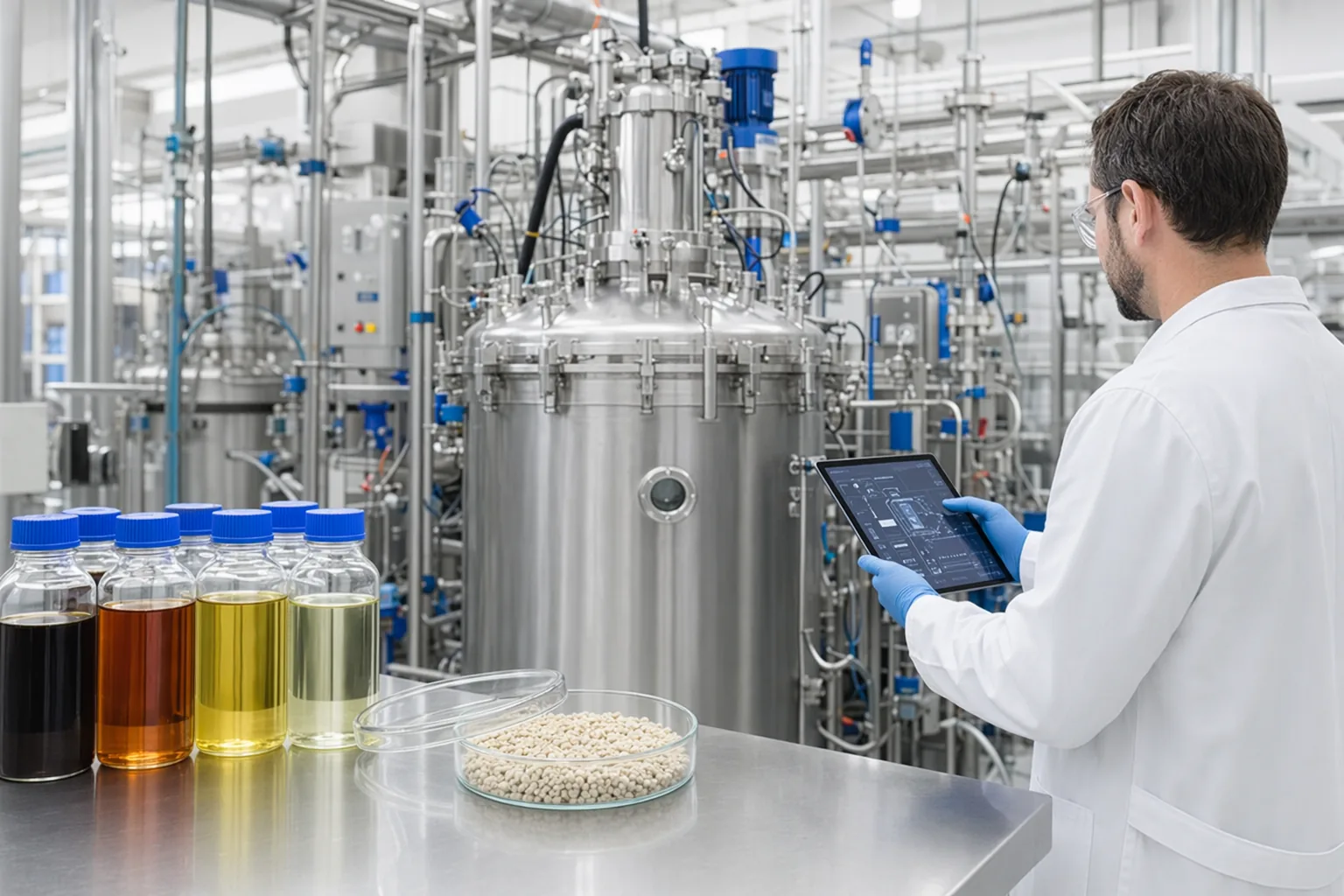
For biodiesel producers, enzyme performance is a cost-in-use question. The right lipase system, process window and supplier controls can reduce rework while protecting yield, FAME quality and downstream purification.
To request a quote, send the product, the quantity and the destination through the inquiry form on our home page; your feedstock profile and target specification help us match the grade.
Why biodiesel plants use enzymes
Enzymatic biodiesel processes are usually built around lipases that catalyze transesterification of oils and fats with methanol or ethanol, or esterification of high-FFA feedstocks. Compared with conventional alkaline routes, enzymatic processing can be attractive when the plant handles waste oils, animal fats, acid oils, or variable feedstocks that otherwise create soap and separation problems. The business case is not simply enzyme price per kilogram; it is cost-in-use across yield, alcohol consumption, pretreatment, washing, glycerol quality, and enzyme reuse. A qualified supplier should help define the process boundary: feedstock quality, alcohol strategy, immobilized or liquid enzyme format, reactor configuration, and downstream purification targets. For buyers, the key is to match enzyme tolerance to actual plant conditions rather than relying on generic activity numbers.
Best fit: high-FFA or variable oil streams • Common catalyst class: lipase • Main value drivers: conversion, separation, reuse, and lower rework
Operating window: temperature, water and alcohol feed
Lipase systems for biodiesel perform best when the plant controls conditions around the catalyst, not just the reactor setpoint. Temperature should be screened across the range the supplier's TDS gives for the specific product: running hotter can speed the chemistry but may shorten enzyme life. pH matters mainly for aqueous pretreatment, enzyme handling or liquid enzyme systems. In a largely nonaqueous transesterification reactor, water activity is more important than bulk pH: too little water can restrict catalytic activity, while excess water can promote hydrolysis and raise acid value, so bracket water content in the first trials. Methanol is commonly added stepwise or continuously because high local alcohol concentrations can deactivate lipase and reduce reuse cycles.
Temperature: screen within the supplier's TDS range • pH: relevant to aqueous steps and liquid enzyme handling • Water: verify by Karl Fischer testing • Alcohol strategy: avoid high local methanol concentration
How to set enzyme dosage without overbuying
Enzyme dosage should be optimized through bench and pilot trials using the actual feedstock slate. For immobilized lipase, screen a dosage ladder by weight of oil, then narrow it based on conversion rate, reuse cycles, and mechanical attrition. For liquid enzyme systems, suppliers may recommend dosage by activity units, mass of oil, or expected FFA load; buyers should ask for a clear conversion to plant-scale dosing. A lower upfront dosage is not always cheaper if reaction time doubles or FAME conversion misses specification. Conversely, overdosing can hide feedstock issues and inflate operating cost. Evaluate dosage using cost per tonne of on-spec biodiesel, including enzyme life, alcohol recovery, neutralization chemicals, wastewater load, and off-spec reprocessing.
Screen dosage against real oil, not refined lab oil only • Measure conversion over time, not only final yield • Calculate cost per tonne of on-spec product • Track enzyme activity loss over reuse cycles
Troubleshooting low conversion, soap, or poor separation
When an enzymatic biodiesel batch underperforms, start with feedstock and mass-transfer checks before changing enzyme supplier. High water, peroxide value, metals, solids, phospholipids, or residual solvents can inhibit activity or foul immobilized carriers. Poor mixing may leave alcohol-rich zones that deactivate lipase while other parts of the reactor remain starved. If FAME conversion stalls, confirm alcohol-to-oil molar ratio, staged alcohol addition, temperature drift, and enzyme age. If acid value rises, water may be too high or hydrolysis may be outpacing esterification. If glycerol separation is poor, look for emulsifiers, soaps from residual alkali, excess mono- and diglycerides, or fine enzyme particles. A troubleshooting plan should include control runs, retained samples, and side-by-side comparison with the supplier’s reference conditions to separate enzyme quality issues from process variation.
Low conversion: check alcohol dosing, temperature, and mixing • High acid value: check water and hydrolysis risk • Poor separation: check soaps, emulsifiers, and solids • Rapid activity loss: check alcohol shock and feed contaminants
QC checks for biodiesel enzyme trials
A disciplined QC plan is essential when evaluating enzymes for biodiesel. Start with incoming feedstock tests: free fatty acid level, acid value, water content, phosphorus, insoluble impurities, peroxide value if oxidation is a concern, and metals or soaps where relevant. During the reaction, track FAME formation by GC, residual mono-, di-, and triglycerides, glycerol separation, acid value reduction, and methanol level. For enzyme lots, request the activity method, unit definition, appearance, moisture or carrier information, recommended storage, shelf-life statement, and a COA tied to the shipped lot. The SDS should address industrial handling, dust or aerosol precautions, and cleanup. These checks allow the formulation team to separate enzyme performance issues from feedstock variability, alcohol inhibition, contamination, or downstream separation problems.
Feedstock QC: FFA, water, phosphorus, insolubles, and acid value • Reaction QC: FAME, residual glycerides, glycerol, methanol, and acid value • Enzyme QC: COA, activity method, lot number, storage, TDS, and SDS
Supplier qualification for biofuel enzyme buyers
A reliable supplier should provide more than a quote. Request a current COA for each batch, a TDS that defines activity method and recommended conditions, and an SDS for safe handling, storage, and disposal. Ask how activity is measured, what storage temperature is required, how long the enzyme is stable, and whether immobilized particles have limits for shear, solvent exposure, or cleaning. For pilot validation, agree on success criteria before testing: FAME conversion by GC, residual glycerides, acid value, water, glycerol quality, enzyme reuse, and filtration behavior. Buyers should compare total technical support, lead time, batch consistency, and documentation quality alongside price. Supplier qualification should also include change-control expectations for formulation, carrier, activity method, or manufacturing site.
Request COA, TDS, and SDS before trials • Define pilot success criteria in writing • Confirm storage, shelf life, and change-control practices • Compare suppliers by cost-in-use, not unit price only
Related applications: cellulosic ethanol and biogas
Although this page focuses on biodiesel, many buyers evaluate cellulosic ethanol and biogas enzyme programs at the same time. A cellulosic ethanol enzyme package typically combines cellulase, hemicellulase, and accessory activities to release fermentable sugars from pretreated biomass. A biomass enzyme or bioethanol enzyme program is optimized around solids loading, pretreatment chemistry, hydrolysis pH, and fermentation compatibility. In biogas, enzymes may be used to improve hydrolysis of fibrous, fatty, or protein-rich substrates before anaerobic digestion, but results depend heavily on residence time and substrate variability. Across all three applications, the same purchasing principle applies: adopt an enzyme route only after feedstock-specific validation, process monitoring, and cost-in-use analysis confirm value.
Cellulosic ethanol: cellulase and hemicellulase systems • Biodiesel: lipase-catalyzed esterification and transesterification • Biogas: hydrolysis support for difficult substrates • All require pilot validation before scale-up
Technical Buying Checklist
Feedstock profile: FFA, water, phosphorus, insolubles and acid value. • Enzyme format chosen: immobilized, liquid or enzyme-assisted pretreatment. • Temperature and water window agreed against the TDS. • Alcohol addition strategy defined (staged or continuous). • COA, TDS and SDS received for the lot to be trialled. • Pilot success criteria written down: FAME conversion by GC, residual glycerides, acid value, glycerol quality and reuse cycles. • Cost per tonne of on-spec biodiesel calculated.
Request a Quote
For a quotation, send the product you need, the quantity per order or per year, the pack format, the destination country and a short process summary (feedstock, FFA level, enzyme format, target specification). Distributors and resellers are welcome; pricing is quoted per order.
Use the inquiry form on our home page, or the email link below.
Biofuel & Industrial Enzymes for Research & Industry
Need Biofuel & Industrial Enzymes for your lab or production process?
ISO 9001 certified · Food-grade & research-grade · Ships to 80+ countries
Frequently Asked Questions
What enzymes are used in biodiesel production?
The main enzymes used in biodiesel production are lipases. They catalyze esterification of free fatty acids and transesterification of triglycerides with methanol or ethanol. Selection depends on feedstock FFA level, water content, alcohol tolerance, reactor design, and whether the plant prefers immobilized enzyme reuse or liquid enzyme dosing.
How should dosage be set for enzymatic biodiesel trials?
Start with a dosage ladder on your actual feedstock and narrow it after kinetic and reuse data are collected. Liquid products may be dosed by activity units or supplier-specific rates. Always calculate cost per tonne of on-spec biodiesel, not just enzyme cost.
Why does methanol addition matter in enzymatic biodiesel?
Lipases can be sensitive to high local methanol concentrations. Dumping all methanol into the reactor at once may slow conversion or shorten enzyme life, especially for reuse systems. Staged, fed-batch, or controlled alcohol addition often improves stability. Pilot trials should compare conversion, residual glycerides, and enzyme reuse under realistic mixing conditions.
How should we qualify a supplier for biodiesel enzymes?
Ask for a COA, TDS, SDS, activity method, storage conditions, shelf life, and pilot support plan. During trials, evaluate FAME conversion, acid value, water, glycerol separation, filtration, and reuse cycles. A strong supplier should help model cost-in-use and document any formulation, carrier, or manufacturing changes that could affect production.
Are biodiesel enzymes the same as cellulosic ethanol enzymes?
No. Biodiesel usually relies on lipases to convert oils and fats into fatty acid alkyl esters. Cellulosic ethanol enzyme systems usually contain cellulases, hemicellulases, and accessory enzymes that release sugars from pretreated biomass. Both are biofuel enzymes, but their substrates, process conditions, QC methods, and commercial success criteria are different.
Ready to source?
Send your feedstock profile, target biodiesel specification, quantity and destination to request a quote for your biodiesel enzyme supply.
Contact Us to Contributehello@mail.enzymepipeline.com