Biofuel Enzymes Supplier Guide for Cellulosic Ethanol
Source biofuel enzymes for cellulosic ethanol with practical specs, process conditions, QC checks, pilot validation, and supplier qualification guidance.
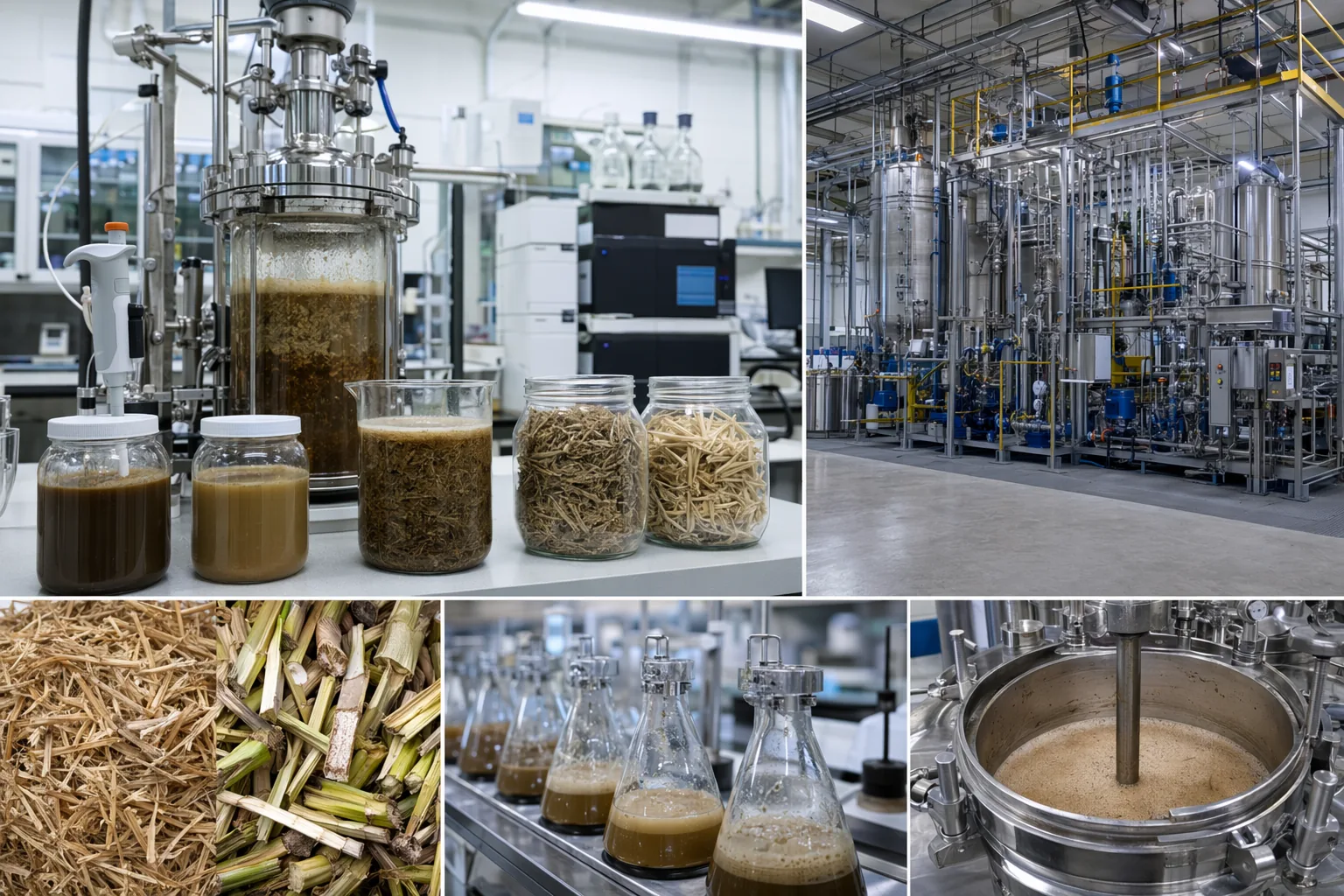
Selecting the right biofuel enzymes supplier for cellulosic ethanol means matching enzyme performance to real biomass, pretreatment chemistry, solids loading, and cost-in-use targets.
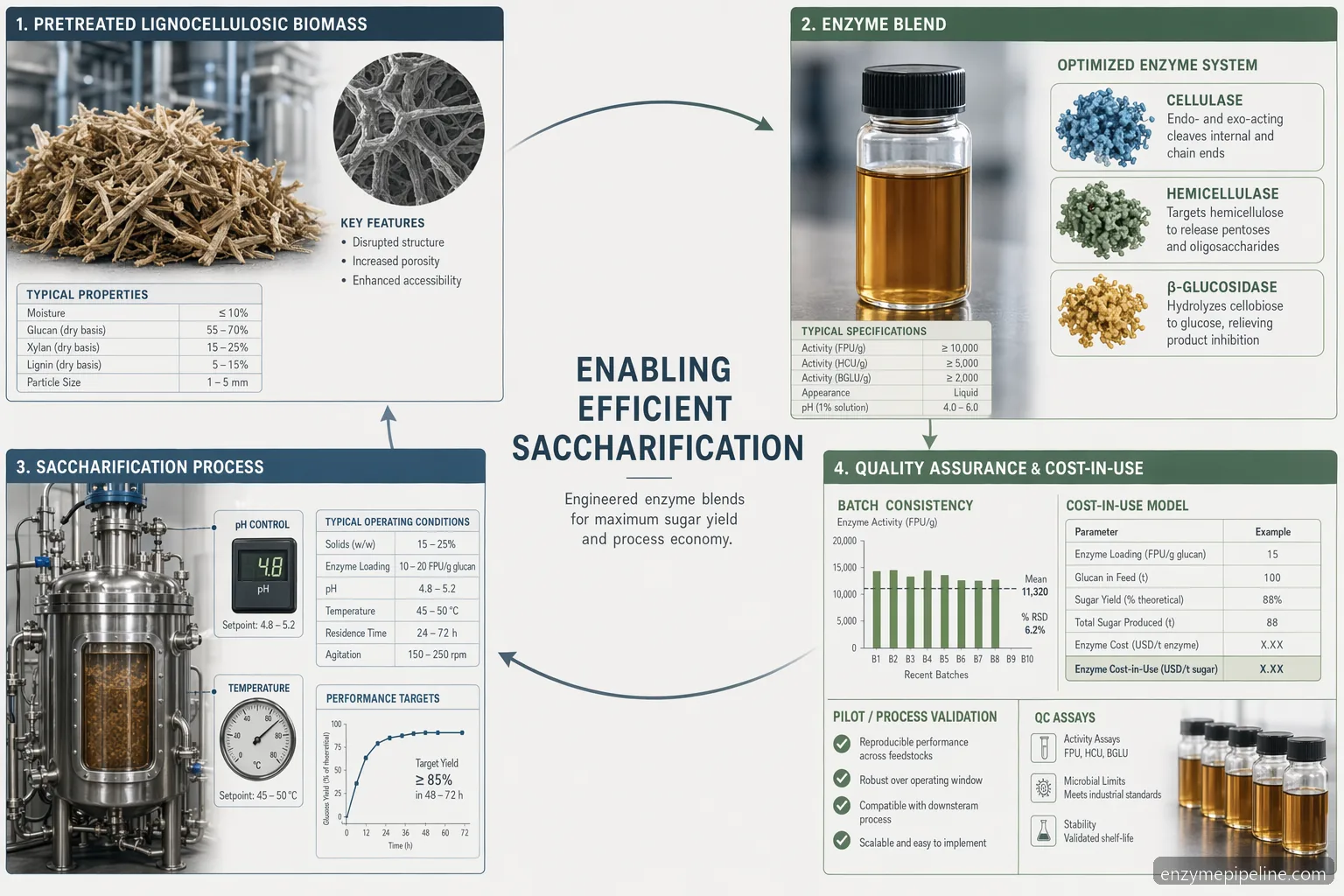
How to Choose a Biofuel Enzymes Supplier for Cellulosic Ethanol
A qualified biofuel enzymes supplier for cellulosic ethanol should understand lignocellulosic feedstocks, not just sell a standard enzyme drum. Corn stover, wheat straw, bagasse, energy grasses, and woody residues respond differently after dilute acid, alkaline, steam explosion, or organosolv pretreatment. The supplier should review carbohydrate composition, lignin level, residual inhibitors, target solids loading, hydrolysis residence time, and downstream fermentation organism before recommending a product. For buyer-intent projects, ask for a technical discussion around industrial biofuel enzymes cellulosic ethanol performance, including cellulase activity, hemicellulase support, beta-glucosidase balance, and accessory activities such as xylanase or LPMO where appropriate. The best selection process starts with lab screening, moves to pilot validation, and ends with commercial terms based on reproducible yield and cost-in-use.
Request feedstock-specific enzyme recommendations, not generic catalog substitutions. • Confirm that the supplier can support lab, pilot, and plant-scale trials. • Evaluate hydrolysis yield, viscosity impact, fermentation compatibility, and storage stability.
Process Conditions for Cellulosic Biofuel Enzymes
Most biofuel enzymes for cellulosic ethanol are applied after pretreatment, washing or conditioning, and slurry pH adjustment. Typical fungal cellulase systems operate around pH 4.5 to 5.5 and 45 to 55°C, while selected thermotolerant biomass enzyme formulations may perform closer to 50 to 60°C depending on the product. Solids loading is often evaluated from 15% to 25% w/w in commercial designs, but viscosity and mixing power may limit practical operation. Enzyme dosage can be screened as FPU per gram cellulose, CBU or beta-glucosidase units per gram glucan, or grams enzyme protein per kilogram glucan, depending on the supplier’s assay basis. A reliable cellulosic ethanol enzyme supplier for cellulosic ethanol should help translate activity units into plant dosing rates.
Screen at plant-relevant pH, temperature, solids, and residence time. • Include inhibitor effects from acetic acid, furfural, HMF, phenolics, or residual alkali. • Measure glucose, xylose, viscosity, residual cellulose, and fermentability.
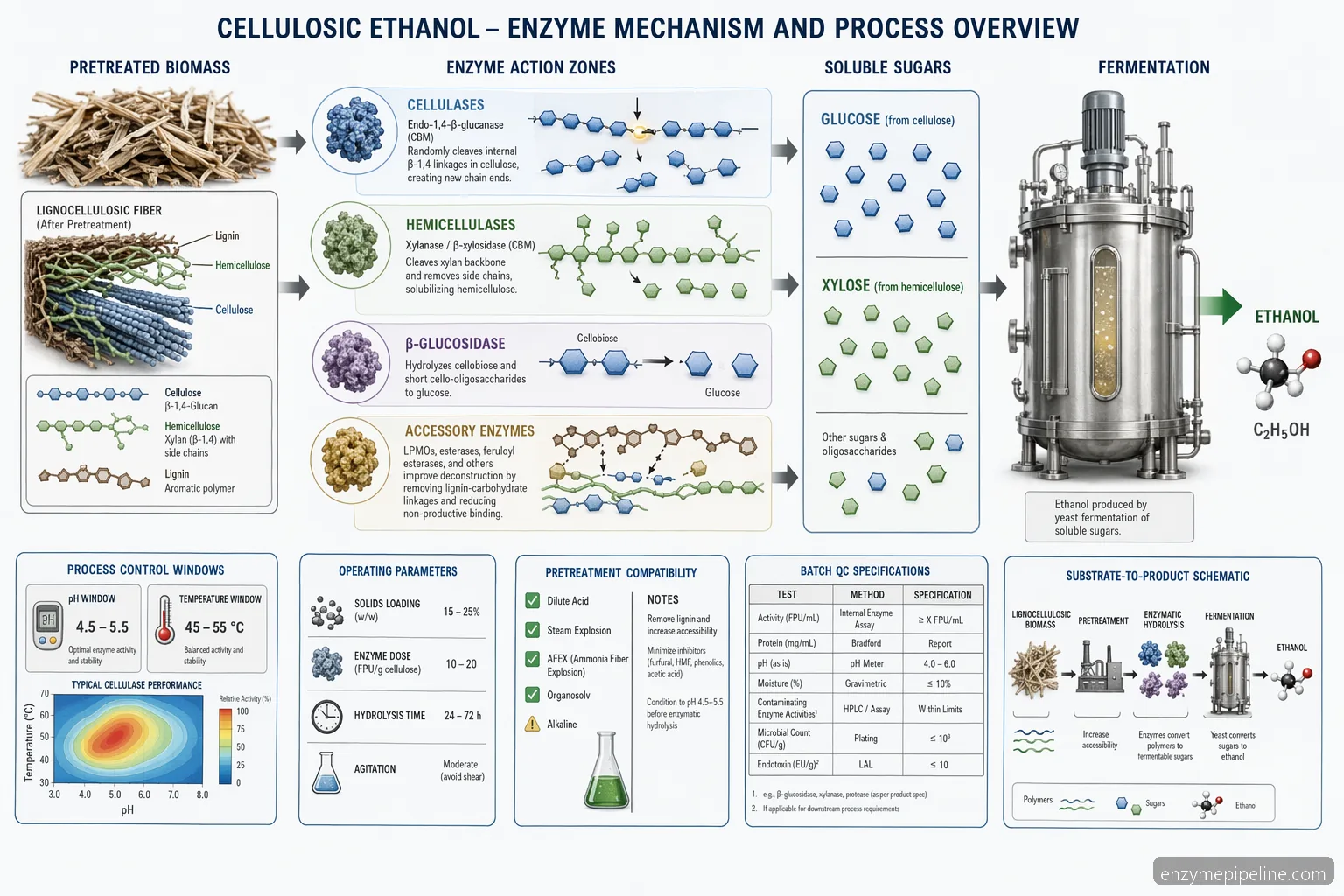
Enzyme Blend Components and Application Fit
Cellulosic biofuel enzymes typically combine endoglucanase, exoglucanase or cellobiohydrolase, beta-glucosidase, xylanase, and other hemicellulase activities to convert cellulose and hemicellulose into fermentable sugars. Accessory enzymes may improve performance on specific biomass by opening fiber structure, reducing cellobiose inhibition, or improving xylan conversion. For cellulosic ethanol, the main performance target is sugar release that can be fermented efficiently into ethanol without adding excessive cost or process complexity. Buyers who also operate biogas or biodiesel assets should distinguish application needs: a cellulosic ethanol enzyme supplier for biogas may focus on hydrolysis and methane yield, while a cellulosic ethanol enzyme supplier for biodiesel would typically involve lipase chemistry rather than cellulase hydrolysis. Keep supplier discussions tied to the actual application and economic objective.
Cellulases drive cellulose conversion to glucose. • Hemicellulases support xylose and arabinose release from xylan-rich biomass. • Beta-glucosidase reduces cellobiose inhibition and supports higher glucose yield. • Accessory enzymes should be justified by measured yield gain or cost reduction.
Quality Documents, QC Checks, and Batch Consistency
For B2B procurement, documentation is part of the product. A biomass enzyme supplier for cellulosic ethanol should provide a Certificate of Analysis, Technical Data Sheet, and Safety Data Sheet for each commercial product. The COA should identify batch number, activity result or release specification, appearance, and relevant physical parameters such as pH, density, or dry matter where applicable. The TDS should describe recommended application conditions, dosage starting points, storage temperature, shelf life, handling instructions, and compatibility notes. Internal buyer QC can include activity verification, microbial bioburden checks where relevant, protein or solids measurement, viscosity, pH, and retained-sample stability. Because enzyme assay methods vary by supplier, procurement teams should avoid comparing unit values unless the assay conditions and substrates are clearly defined.
Require COA, TDS, SDS, batch traceability, and agreed release criteria. • Clarify enzyme activity assay method, temperature, pH, substrate, and calculation basis. • Retain samples from each batch for troubleshooting and stability comparison.
Pilot Validation, Cost-in-Use, and Supplier Qualification
Before contracting a biofuel enzymes supplier for cellulosic ethanol, run a staged validation program. Bench trials can narrow dosage, pH, temperature, and residence time. Pilot trials should then use representative pretreated biomass, realistic mixing, target solids loading, and downstream fermentation to confirm ethanol yield. Cost-in-use should include enzyme dose, sugar yield, fermentation productivity, nutrient or chemical changes, water balance, handling losses, freight, storage, and any reduction in residence time or energy demand. Supplier qualification should also review manufacturing capacity, lead time, change notification practices, technical support, regulatory documentation for industrial handling, and the ability to supply consistent lots. A strong partner for biofuel ethanol production enzymes will support troubleshooting without overstating results before your feedstock and process are validated.
Compare enzyme options on dollars per fermentable sugar or ethanol output. • Use pilot data before locking long-term volume commitments. • Agree on batch change notification, complaint handling, and supply continuity expectations.
Technical Buying Checklist
Buyer Questions
Ask for feedstock-specific recommendations, COA, TDS, SDS, activity assay methods, starting dosage guidance, storage requirements, and pilot support. The supplier should review pretreatment type, pH, temperature, solids loading, inhibitors, hydrolysis time, and fermentation organism. For commercial sourcing, also discuss lead time, batch consistency, change notification, retained samples, and cost-in-use calculation rather than only drum price.
Dosing is usually optimized through lab and pilot trials because feedstock and pretreatment strongly affect performance. Suppliers may express dose as activity units per gram cellulose, beta-glucosidase units per gram glucan, grams enzyme protein per kilogram glucan, or liquid product dose per ton of biomass. Buyers should align assay methods before comparing products and should evaluate sugar yield, viscosity, fermentation results, and cost-in-use.
Usually not as a single optimized product. Cellulosic ethanol relies mainly on cellulase, hemicellulase, and beta-glucosidase systems for fermentable sugar release. Biogas enzymes may emphasize hydrolysis that improves methane potential, while biodiesel enzyme applications often involve lipases for oil or ester reactions. A supplier may serve all three markets, but the enzyme chemistry and performance tests should be application-specific.
Useful pilot data includes glucan and xylan conversion, glucose and xylose release, residual cellulose, slurry viscosity, mixing behavior, inhibitor carryover, fermentation ethanol yield, residence time, and enzyme dose response. Run trials at realistic solids loading and temperature using representative pretreated biomass. Procurement should convert these results into cost per fermentable sugar or ethanol output, then confirm supply terms and quality documentation.
Related Search Themes
industrial biofuel enzymes cellulosic ethanol, biofuel enzymes for cellulosic ethanol, cellulosic ethanol enzyme supplier for cellulosic ethanol, cellulosic ethanol enzyme supplier for biogas, cellulosic ethanol enzyme supplier for biodiesel, cellulosic biofuel enzymes
Biofuel & Industrial Enzymes for Research & Industry
Need Biofuel & Industrial Enzymes for your lab or production process?
ISO 9001 certified · Food-grade & research-grade · Ships to 80+ countries
Frequently Asked Questions
What should buyers ask a biofuel enzymes supplier for cellulosic ethanol?
Ask for feedstock-specific recommendations, COA, TDS, SDS, activity assay methods, starting dosage guidance, storage requirements, and pilot support. The supplier should review pretreatment type, pH, temperature, solids loading, inhibitors, hydrolysis time, and fermentation organism. For commercial sourcing, also discuss lead time, batch consistency, change notification, retained samples, and cost-in-use calculation rather than only drum price.
How are biofuel enzymes for cellulosic ethanol dosed?
Dosing is usually optimized through lab and pilot trials because feedstock and pretreatment strongly affect performance. Suppliers may express dose as activity units per gram cellulose, beta-glucosidase units per gram glucan, grams enzyme protein per kilogram glucan, or liquid product dose per ton of biomass. Buyers should align assay methods before comparing products and should evaluate sugar yield, viscosity, fermentation results, and cost-in-use.
Can one biomass enzyme work for ethanol, biodiesel, and biogas?
Usually not as a single optimized product. Cellulosic ethanol relies mainly on cellulase, hemicellulase, and beta-glucosidase systems for fermentable sugar release. Biogas enzymes may emphasize hydrolysis that improves methane potential, while biodiesel enzyme applications often involve lipases for oil or ester reactions. A supplier may serve all three markets, but the enzyme chemistry and performance tests should be application-specific.
What pilot data is most useful before commercial enzyme procurement?
Useful pilot data includes glucan and xylan conversion, glucose and xylose release, residual cellulose, slurry viscosity, mixing behavior, inhibitor carryover, fermentation ethanol yield, residence time, and enzyme dose response. Run trials at realistic solids loading and temperature using representative pretreated biomass. Procurement should convert these results into cost per fermentable sugar or ethanol output, then confirm supply terms and quality documentation.
Ready to source?
Turn This Guide Into a Supplier Brief Send your feedstock, pretreatment, and target process conditions to Enzyme Pipeline for a cellulosic ethanol enzyme sourcing review.
Contact Us to Contribute