Industrial Biomass Enzyme Cellulosic Ethanol Specification Checklist
Compare biofuel enzymes for cellulosic ethanol with specs, pH, temperature, dosage, QC, COA/TDS/SDS, pilot trials, and cost-in-use factors.
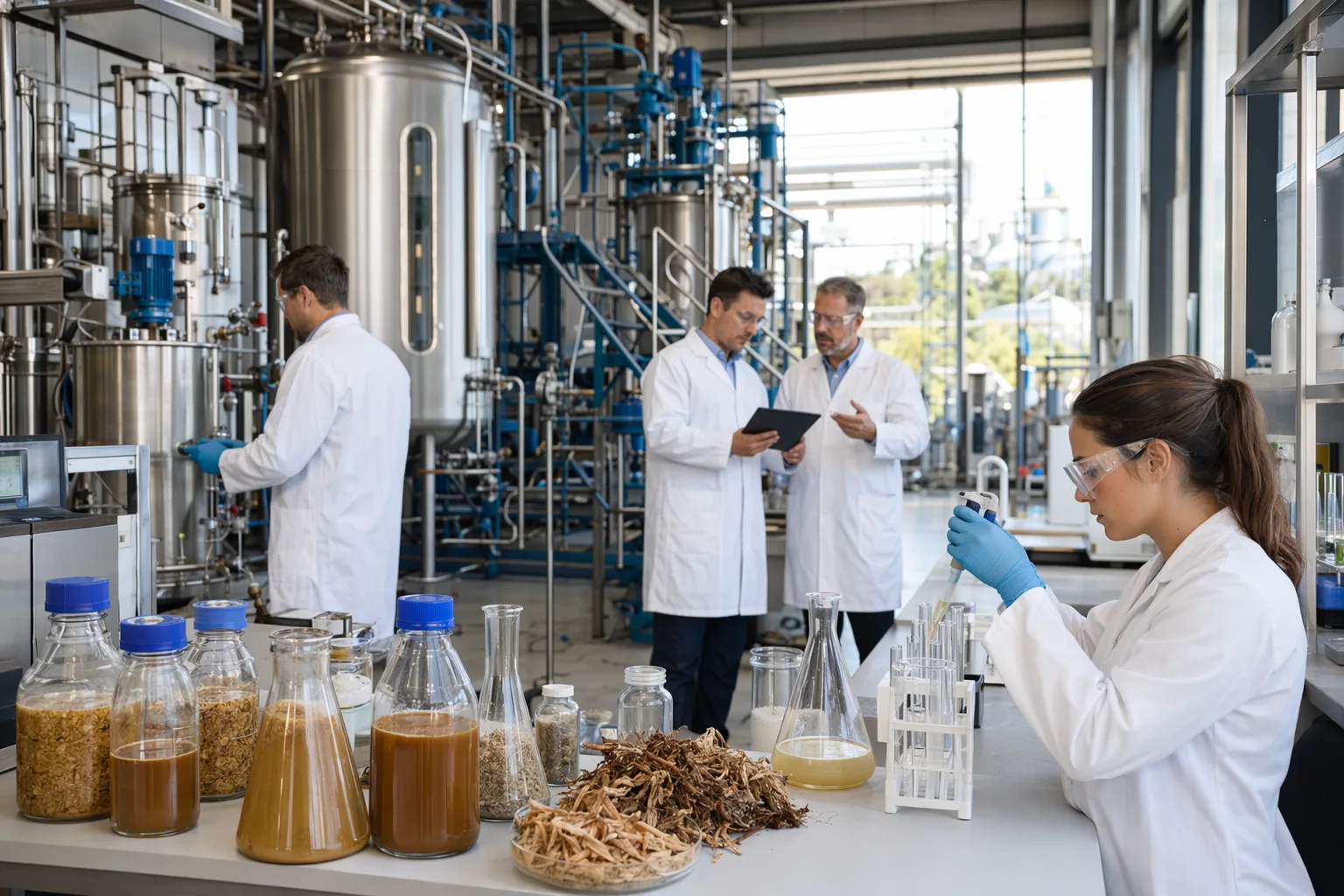
Use this buyer-focused checklist to compare biofuel enzyme options for cellulosic ethanol, validate supplier data, and estimate true cost-in-use before scale-up.
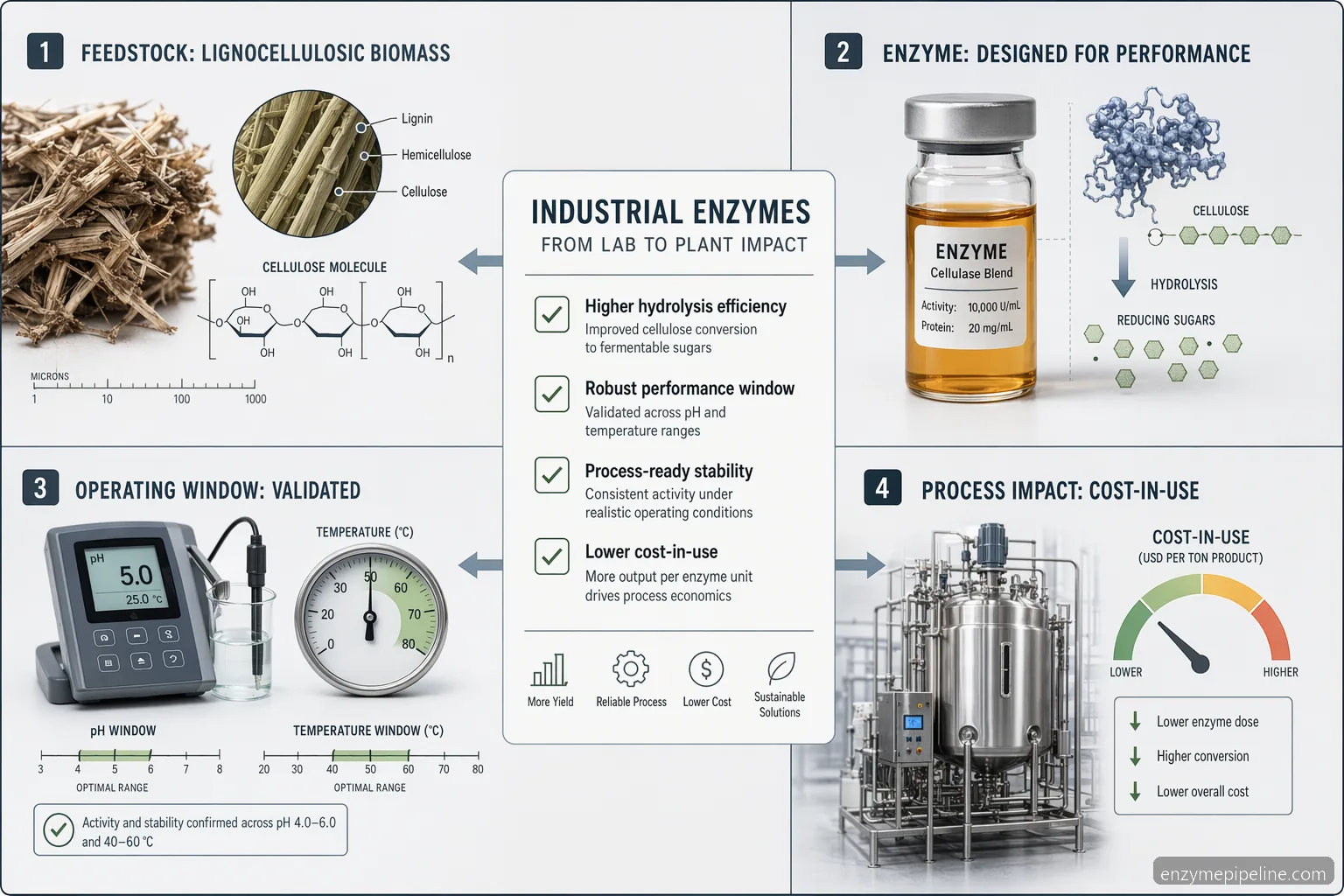
Start With the Conversion Objective
For comparison purchasing, define the target conversion before requesting quotes. An industrial biomass enzyme cellulosic ethanol program usually needs a coordinated blend of cellulase, beta-glucosidase, hemicellulase, and accessory activities matched to pretreated corn stover, bagasse, wheat straw, wood residues, or other lignocellulosic substrates. The same supplier may also offer biomass enzyme products positioned for biogas or biodiesel support, but cellulosic ethanol requires a tighter focus on hydrolysis yield, fermentable sugar release, and inhibitor management. Ask whether the product is a complete bioethanol enzyme system or a component enzyme intended for custom blending. For each candidate, compare digestibility after your pretreatment, glucan and xylan conversion, glucose accumulation, viscosity behavior, and compatibility with fermentation organisms. This prevents a low unit-price enzyme from becoming expensive due to slow hydrolysis, higher dosage, or yield loss.
Define feedstock, pretreatment, solids loading, and target ethanol yield. • Separate complete enzyme systems from single-activity additives. • Compare performance on your biomass, not only on model substrates.
Check pH, Temperature, Dosage, and Process Fit
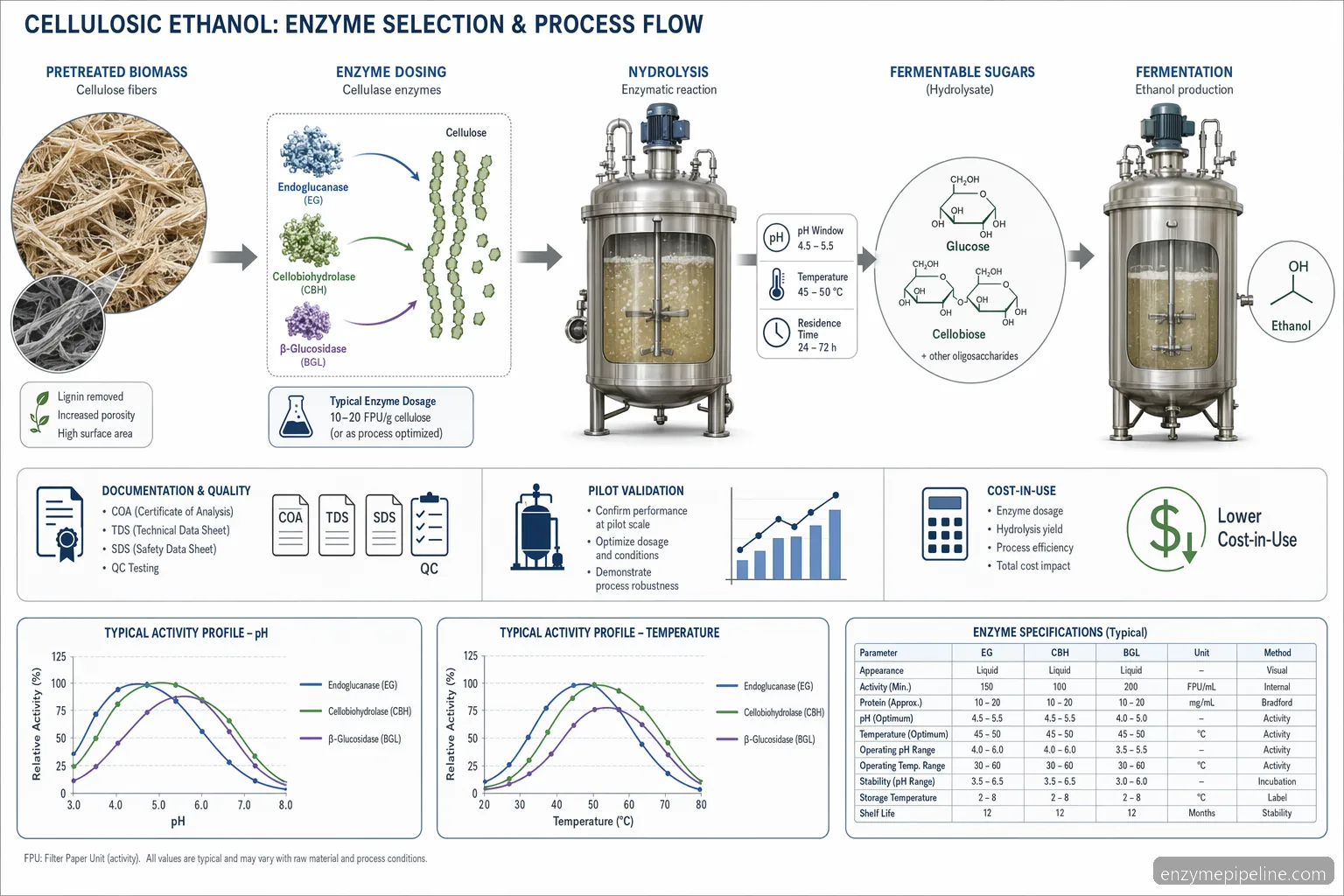
Most cellulosic ethanol hydrolysis steps operate in mildly acidic conditions, commonly around pH 4.5 to 5.5, with temperatures often near 45 to 55 °C for fungal cellulase systems. Some processes use lower-temperature simultaneous saccharification and fermentation, often about 32 to 38 °C, to protect yeast or bacteria. Request the supplier’s recommended operating range and the activity-retention data behind it. Initial screening dosage bands may be expressed as enzyme product per dry metric ton of biomass, filter paper units, cellulase units, or protein per gram of cellulose; practical trials often begin with a low, midpoint, and high dose rather than a single value. Confirm mixing needs, addition timing, residence time, and whether the enzyme tolerates residual acids, phenolics, furans, salts, or surfactants from pretreatment.
Typical hydrolysis screen: pH 4.5-5.5 and 45-55 °C. • SSF screen: often 32-38 °C, depending on fermenting organism. • Test at least three dosage points to build a response curve.
Review Documentation: COA, TDS, SDS, and QC
A biomass enzyme supplier for cellulosic ethanol should provide enough documentation for technical, safety, and procurement review. The certificate of analysis should identify batch number, release date, activity result, method reference, appearance, and any relevant physical specifications such as pH, density, or moisture. The technical data sheet should describe application guidance, recommended storage, shelf-life basis, and handling conditions. The safety data sheet should support site EHS review for storage, spill response, personal protective equipment, and transport classification. For comparison, ask whether the activity assay reflects cellulase, xylanase, beta-glucosidase, or a proprietary composite method. Also request batch-to-batch trend data where available. Consistent QC methods help buyers compare industrial biofuel enzymes cellulosic ethanol candidates without relying on marketing language alone.
Require COA, TDS, and SDS before plant trial approval. • Ask for assay method references and sample retention policy. • Compare batch consistency as part of supplier qualification.
Run Pilot Validation Before Commercial Award
Pilot validation should reproduce the expected commercial process as closely as possible. Use your actual pretreated biomass, target dry-solids level, planned enzyme addition point, hydrolysis residence time, and fermentation strategy. Measure released glucose and xylose, residual cellulose, ethanol titer, ethanol yield, viscosity, contamination risk, and any impact on distillation or wastewater load. Include a control enzyme and at least one alternate supplier to create a defensible comparison. For industrial cellulosic ethanol enzyme cellulosic ethanol screening, normalize results by dry biomass, cellulose content, and delivered enzyme activity. If the enzyme is also promoted as an industrial cellulosic ethanol enzyme biogas or industrial cellulosic ethanol enzyme biodiesel aid, keep those claims separate from the ethanol trial. Pilot data should determine the shortlist, not brochure specifications alone.
Use the same biomass lot for side-by-side enzyme comparisons. • Track sugar release, ethanol yield, solids handling, and downstream effects. • Normalize results to cost per liter of ethanol or per metric ton processed.
Calculate Cost-in-Use and Qualify the Supplier
The lowest quoted price is not always the lowest production cost. Cost-in-use should include enzyme dosage, delivered activity, hydrolysis time, solids throughput, ethanol yield, storage losses, freight, packaging disposal, and process changes needed to make the enzyme work. A higher-priced biofuel enzyme can be more economical if it enables lower dosage, shorter residence time, higher solids loading, or more consistent conversion. Supplier qualification should cover manufacturing location, lead time, sample process, technical support, change notification, packaging formats, minimum order quantity, and documentation responsiveness. For adjacent programs, compare industrial biomass enzyme biogas and industrial biomass enzyme biodiesel products separately because performance criteria differ. A qualified partner should support scale-up with transparent data, realistic limitations, and practical troubleshooting rather than broad unsupported claims.
Model cost per liter of ethanol, not only enzyme price. • Confirm packaging, storage temperature, shelf life, and lead time. • Require change-control communication for formulation or site changes.
Technical Buying Checklist
Buyer Questions
Compare products on your actual pretreated biomass under realistic pH, temperature, solids loading, and residence time. Request COA, TDS, SDS, activity methods, and recommended dosage ranges. Then run side-by-side pilot trials measuring sugar release, ethanol yield, viscosity, and downstream impact. The best industrial biomass enzyme cellulosic ethanol option is the one with the strongest cost-in-use, not simply the lowest quoted price.
Many cellulase-based hydrolysis trials start around pH 4.5 to 5.5 and 45 to 55 °C. Simultaneous saccharification and fermentation may run cooler, often near 32 to 38 °C, to suit the fermenting organism. These are screening ranges, not universal rules. Always verify the supplier’s technical data and confirm performance with your feedstock, pretreatment chemistry, and operating constraints.
A qualified supplier should provide a certificate of analysis, technical data sheet, and safety data sheet. The COA should include batch identification and activity results with a method reference. The TDS should outline application guidance, storage, and shelf life. The SDS supports EHS review. Buyers should also ask for batch consistency information, packaging details, lead time, and any change-notification practices.
Some suppliers market broad biomass enzyme portfolios across cellulosic ethanol, biogas, and biodiesel, but performance criteria differ. Cellulosic ethanol focuses on fermentable sugar release and ethanol yield. Biogas applications may emphasize hydrolysis rate and methane potential. Biodiesel enzyme use may involve lipid processing rather than lignocellulose breakdown. Evaluate each application separately with relevant pilot tests and economic metrics.
Use cost-in-use rather than price per kilogram. Include dosage, delivered activity, freight, storage stability, hydrolysis time, ethanol yield, solids throughput, and any effect on downstream separation or wastewater. A product with a higher unit price may reduce total operating cost if it improves conversion, shortens residence time, or supports higher solids loading without creating process penalties.
Related Search Themes
industrial cellulosic ethanol enzyme cellulosic ethanol, industrial cellulosic ethanol enzyme biogas, industrial cellulosic ethanol enzyme biodiesel, biomass enzyme supplier for cellulosic ethanol, biomass enzyme for cellulosic ethanol, industrial biomass enzyme biogas
Biofuel & Industrial Enzymes for Research & Industry
Need Biofuel & Industrial Enzymes for your lab or production process?
ISO 9001 certified · Food-grade & research-grade · Ships to 80+ countries
Frequently Asked Questions
How should buyers compare biofuel enzymes for cellulosic ethanol?
Compare products on your actual pretreated biomass under realistic pH, temperature, solids loading, and residence time. Request COA, TDS, SDS, activity methods, and recommended dosage ranges. Then run side-by-side pilot trials measuring sugar release, ethanol yield, viscosity, and downstream impact. The best industrial biomass enzyme cellulosic ethanol option is the one with the strongest cost-in-use, not simply the lowest quoted price.
What pH and temperature are typical for a biomass enzyme for cellulosic ethanol?
Many cellulase-based hydrolysis trials start around pH 4.5 to 5.5 and 45 to 55 °C. Simultaneous saccharification and fermentation may run cooler, often near 32 to 38 °C, to suit the fermenting organism. These are screening ranges, not universal rules. Always verify the supplier’s technical data and confirm performance with your feedstock, pretreatment chemistry, and operating constraints.
Which documents should a biomass enzyme supplier provide?
A qualified supplier should provide a certificate of analysis, technical data sheet, and safety data sheet. The COA should include batch identification and activity results with a method reference. The TDS should outline application guidance, storage, and shelf life. The SDS supports EHS review. Buyers should also ask for batch consistency information, packaging details, lead time, and any change-notification practices.
Can the same enzyme be used for cellulosic ethanol, biogas, and biodiesel?
Some suppliers market broad biomass enzyme portfolios across cellulosic ethanol, biogas, and biodiesel, but performance criteria differ. Cellulosic ethanol focuses on fermentable sugar release and ethanol yield. Biogas applications may emphasize hydrolysis rate and methane potential. Biodiesel enzyme use may involve lipid processing rather than lignocellulose breakdown. Evaluate each application separately with relevant pilot tests and economic metrics.
What is the most important cost metric for industrial bioethanol enzyme selection?
Use cost-in-use rather than price per kilogram. Include dosage, delivered activity, freight, storage stability, hydrolysis time, ethanol yield, solids throughput, and any effect on downstream separation or wastewater. A product with a higher unit price may reduce total operating cost if it improves conversion, shortens residence time, or supports higher solids loading without creating process penalties.
Ready to source?
Turn This Guide Into a Supplier Brief Request a supplier comparison worksheet and pilot-trial checklist for cellulosic ethanol enzyme sourcing.
Contact Us to Contribute