Cellulosic Ethanol Enzyme for Cellulosic Ethanol: Specification Checklist
Compare cellulosic ethanol enzyme specs, process fit, QC, cost-in-use, and supplier qualification for industrial biofuel projects.
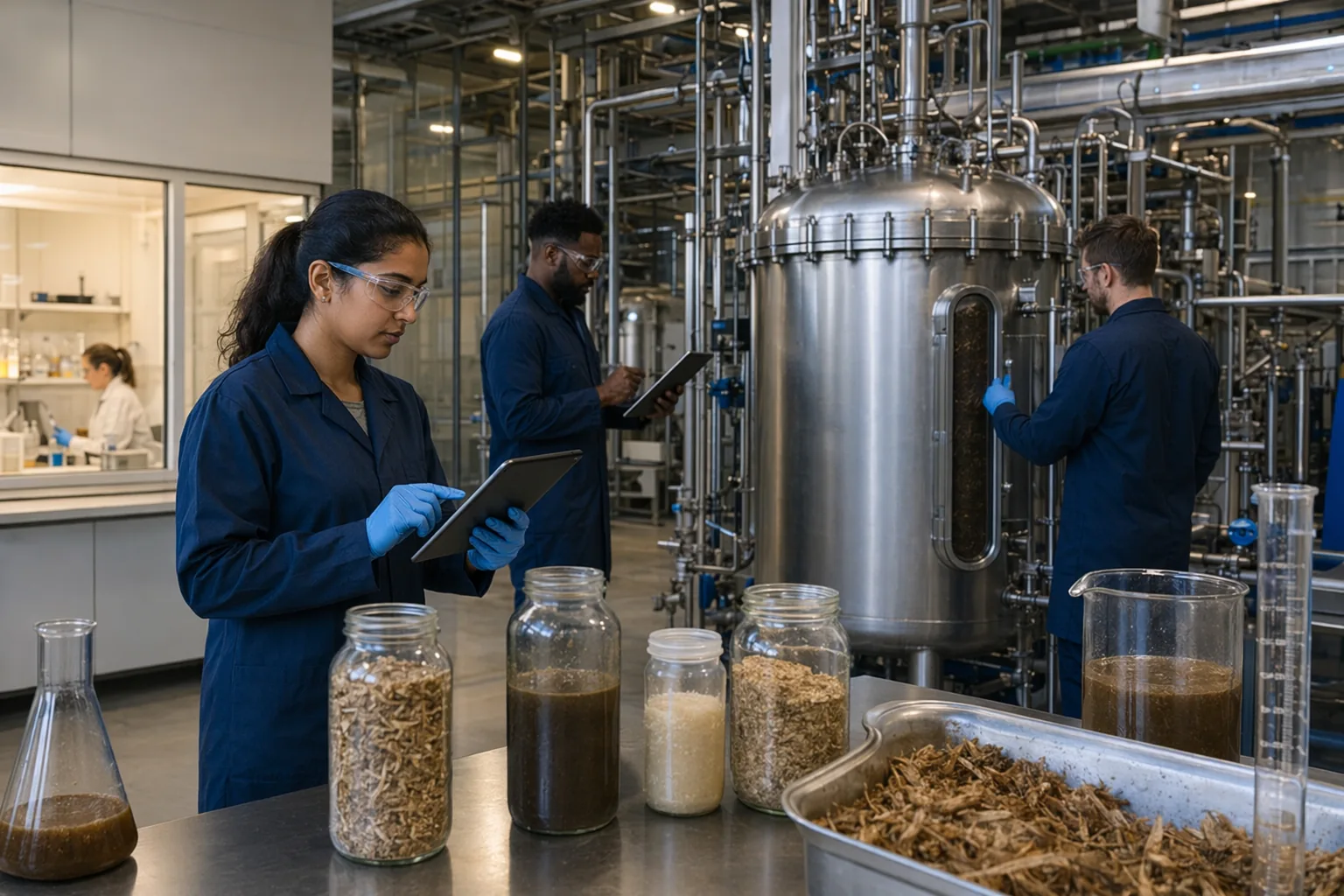
A practical B2B guide for comparing biofuel enzymes, qualifying suppliers, and validating enzyme performance in cellulosic ethanol production.
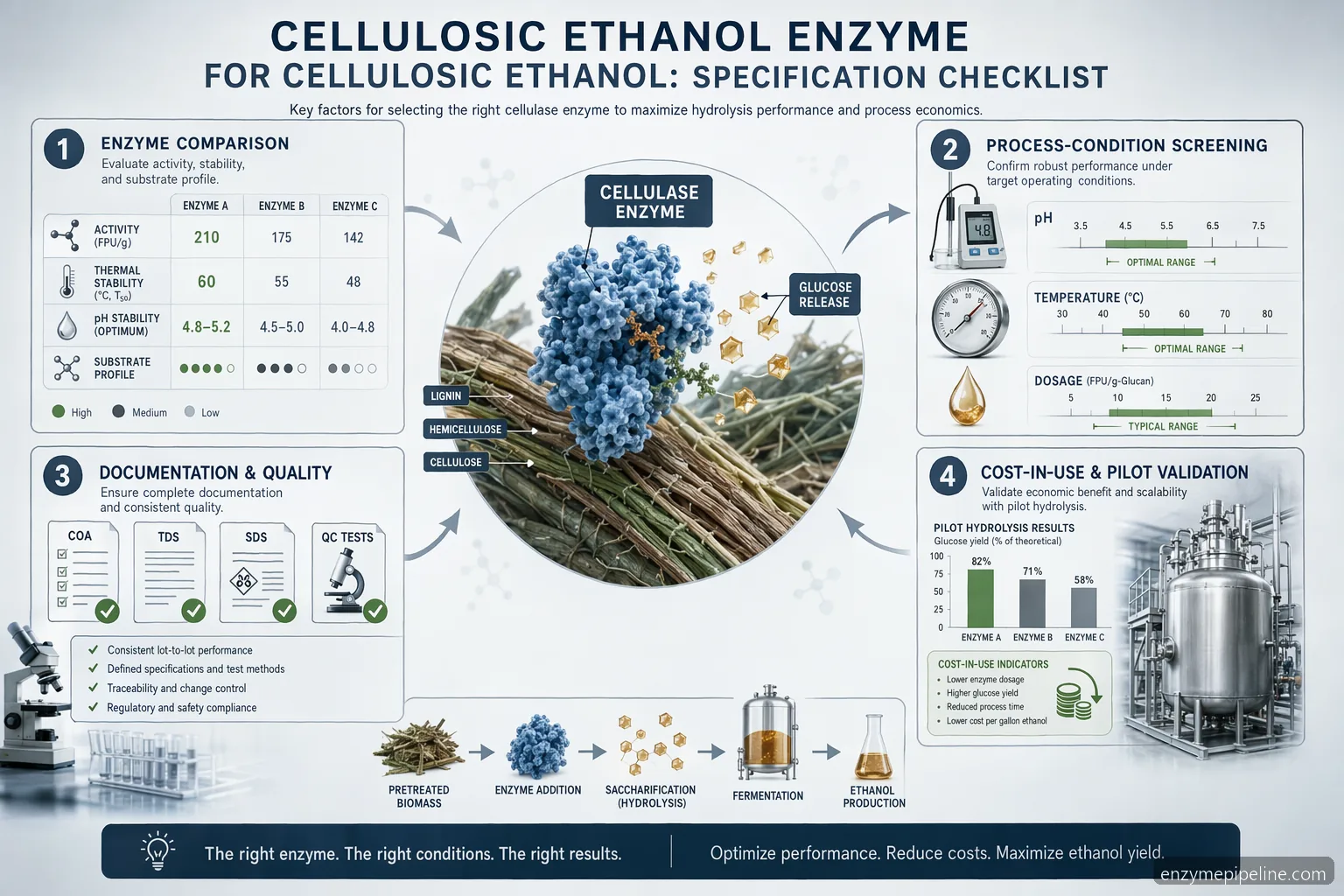
How to Compare Biofuel Enzymes for Cellulosic Ethanol
Selecting a cellulosic ethanol enzyme for cellulosic ethanol is not a simple activity-unit comparison. Industrial buyers should compare the complete enzyme system against the actual biomass, pretreatment severity, solids level, and fermentation strategy. A strong candidate usually includes cellulase, beta-glucosidase, hemicellulase, and accessory activities that work together to release glucose and C5 sugars. For pretreated corn stover, wheat straw, bagasse, or hardwood residues, useful screening ranges often start around pH 4.5-5.5 and 45-55°C, then adjust for the plant’s hydrolysis and simultaneous saccharification requirements. The right industrial biomass enzyme cellulosic ethanol program should improve sugar release without creating downstream fermentation penalties. Compare suppliers by reproducible yield curves, documentation quality, technical support, and the ability to support trial volumes before full-scale supply.
Compare enzyme cocktails on your own pretreated biomass, not only model substrates. • Request activity definitions, assay conditions, and lot-to-lot variability limits. • Check compatibility with yeast, nutrients, antifoam, and residual pretreatment chemicals. • Evaluate hydrolysis performance at realistic solids loading, not only dilute lab slurries.
Process Conditions and Dosage Screening
A specification checklist should translate vendor data into practical plant conditions. Many cellulosic ethanol processes evaluate enzyme dosage in the range of 5-25 FPU cellulase per gram cellulose, with beta-glucosidase, xylanase, and accessory enzymes adjusted by feedstock response. These are screening bands, not purchase specifications; pilot work should determine the economically optimal dosage. Typical hydrolysis studies may run 24-96 hours, pH 4.8-5.2, and 48-52°C, while integrated SSF processes may operate closer to fermentation temperature. High-solids systems need special attention to mixing, viscosity reduction, mass transfer, and enzyme distribution. For industrial cellulosic ethanol enzyme cellulosic ethanol purchasing, compare sugar yield at multiple residence times and dosages. The lowest price per kilogram may lose value if it requires higher loading, longer hydrolysis, or additional downstream correction.
Run a dosage-response curve before negotiating annual volumes. • Track glucose, xylose, total reducing sugars, viscosity, and residual cellulose. • Confirm pH and temperature stability across the planned residence time. • Include shipping, storage, dilution, and handling losses in cost-in-use.
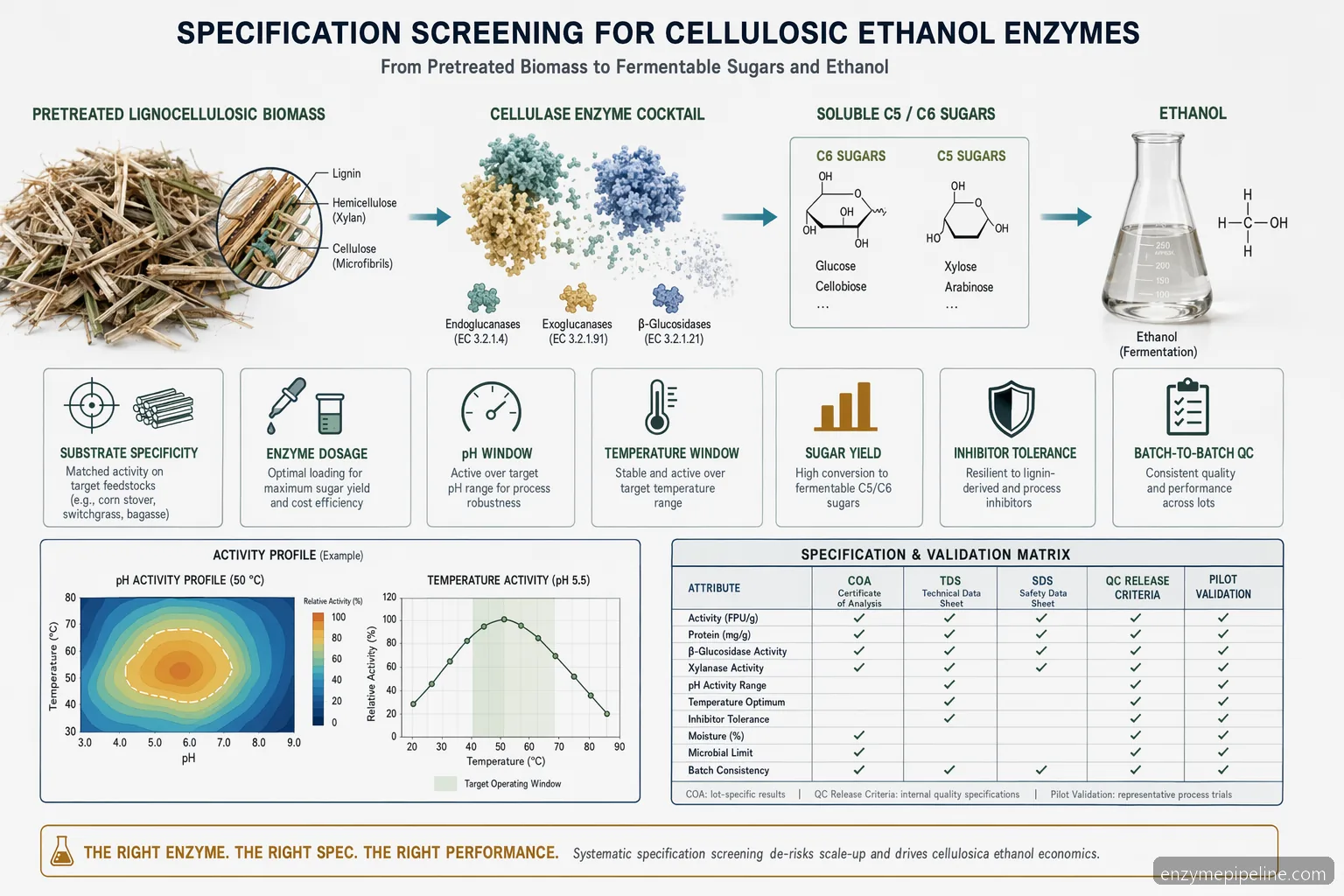
Documentation: COA, TDS, SDS, and QC Requirements
A qualified cellulosic ethanol enzyme supplier for cellulosic ethanol should provide documentation that supports procurement, quality, safety, and process engineering. The Certificate of Analysis should identify the lot, activity results, assay method, appearance, pH or density where relevant, and release criteria. The Technical Data Sheet should describe recommended use ranges, storage conditions, handling guidance, and compatibility limits. The Safety Data Sheet should support site EHS review, transport classification, PPE planning, spill response, and safe disposal. Buyers should avoid relying on undocumented claims or non-comparable activity units. Instead, request reference methods, retained sample policy, shelf-life data, and lot-change notification practices. For global supply, confirm packaging formats, cold-chain or ambient stability needs, lead times, and whether the supplier can maintain consistent material during extended pilot and commercial campaigns.
Require COA, TDS, and SDS before production trials. • Ask for assay repeatability, release limits, and retained sample policy. • Confirm shelf life under your warehouse temperature conditions. • Document change-control expectations before contract supply.
Cost-in-Use Versus Unit Price
Comparison buyers should calculate the delivered cost per unit of fermentable sugar, not only the enzyme price per kilogram or per activity unit. A higher-priced bioethanol enzyme can be preferable if it releases more sugar at lower dosage, reduces hydrolysis time, improves high-solids handling, or allows higher ethanol titer. Build a cost-in-use model that includes enzyme dosage, sugar yield, ethanol yield, throughput, storage requirements, freight, dilution water, cleaning impact, and waste handling. For an industrial cellulosic ethanol enzyme biogas comparison, consider whether residual solids after ethanol hydrolysis have improved digestibility for anaerobic digestion. For an industrial cellulosic ethanol enzyme biodiesel or cellulosic ethanol enzyme supplier for biodiesel review, keep the economics separate because lipase-catalyzed oil conversion has different substrates, pH exposure, water activity, and separation requirements.
Normalize offers by cost per metric ton of dry biomass processed. • Model cost per kilogram of glucose or fermentable sugar released. • Include inventory risk, minimum order quantities, and lead-time buffers. • Separate ethanol, biogas, and biodiesel enzyme economics.
Pilot Validation and Supplier Qualification
Before a commercial award, pilot validation should confirm that the selected cellulosic ethanol enzyme for cellulosic ethanol performs under representative feedstock variability and plant operating windows. Use consistent sampling, moisture correction, compositional analysis, and mass balance methods. A useful pilot protocol compares at least one incumbent or benchmark formulation, the proposed enzyme system, and a reduced-dosage scenario to define operating margin. Confirm that performance remains stable across different pretreatment batches and inhibitor levels such as acetic acid, furans, or phenolics when relevant. Supplier qualification should include production capacity, technical service response, documentation quality, packaging options, logistics reliability, and change-control discipline. The best cellulosic ethanol enzyme supplier for biogas or ethanol integration will help interpret trial data without overpromising results. Commercial contracts should define specifications, notification timelines, dispute testing, and contingency supply planning.
Validate at lab, pilot, and demonstration scale before full adoption. • Use mass balance and sugar analytics to avoid misleading conversion results. • Assess supplier support during troubleshooting and process upsets. • Define acceptance criteria before ordering commercial volumes.
Technical Buying Checklist
Buyer Questions
A cellulosic ethanol enzyme is selected for releasing fermentable sugars from pretreated lignocellulosic biomass under ethanol-process conditions. A general biomass enzyme may target fiber modification, viscosity reduction, or digestibility in other applications. For industrial biomass enzyme cellulosic ethanol use, buyers should verify cellulase, beta-glucosidase, hemicellulase, inhibitor tolerance, and compatibility with the chosen fermentation route.
Compare them through side-by-side trials on the same biomass, solids loading, pH, temperature, residence time, and analytical method. Normalize the result by fermentable sugar yield, dosage, and delivered cost. Also review COA, TDS, SDS, lot consistency, storage requirements, lead time, and technical support. The most economical offer is often the one with the best cost-in-use, not the lowest unit price.
It can, but it must be validated. If ethanol hydrolysis leaves residual solids that are more digestible, a downstream anaerobic digester may see improved biogas potential. However, value depends on residual composition, inhibitors, pH adjustment, nutrient balance, and digester retention time. A cellulosic ethanol enzyme supplier for biogas integration should support pilot data rather than relying on generic conversion assumptions.
Usually no. Cellulosic ethanol enzymes mainly hydrolyze cellulose and hemicellulose into fermentable sugars, while biodiesel enzyme systems often use lipases for transesterification or esterification of oils and fats. A cellulosic ethanol enzyme supplier for biodiesel discussions may support broader biofuel sourcing, but the specifications, substrates, water activity, process conditions, and economic models should be evaluated separately.
Request the COA, TDS, SDS, activity assay method, recommended handling conditions, shelf-life information, packaging details, and any available application data relevant to your feedstock. For a serious pilot, also ask for sample retention practices, change-control expectations, and technical contact availability. These documents help procurement, engineering, QC, and EHS teams evaluate the enzyme before scale-up.
Related Search Themes
industrial cellulosic ethanol enzyme cellulosic ethanol, industrial cellulosic ethanol enzyme biogas, industrial cellulosic ethanol enzyme biodiesel, industrial biomass enzyme cellulosic ethanol, cellulosic ethanol enzyme supplier for cellulosic ethanol, cellulosic ethanol enzyme supplier for biogas
Biofuel & Industrial Enzymes for Research & Industry
Need Biofuel & Industrial Enzymes for your lab or production process?
ISO 9001 certified · Food-grade & research-grade · Ships to 80+ countries
Frequently Asked Questions
What makes a cellulosic ethanol enzyme different from a general biomass enzyme?
A cellulosic ethanol enzyme is selected for releasing fermentable sugars from pretreated lignocellulosic biomass under ethanol-process conditions. A general biomass enzyme may target fiber modification, viscosity reduction, or digestibility in other applications. For industrial biomass enzyme cellulosic ethanol use, buyers should verify cellulase, beta-glucosidase, hemicellulase, inhibitor tolerance, and compatibility with the chosen fermentation route.
How should buyers compare two industrial cellulosic ethanol enzyme offers?
Compare them through side-by-side trials on the same biomass, solids loading, pH, temperature, residence time, and analytical method. Normalize the result by fermentable sugar yield, dosage, and delivered cost. Also review COA, TDS, SDS, lot consistency, storage requirements, lead time, and technical support. The most economical offer is often the one with the best cost-in-use, not the lowest unit price.
Can a cellulosic ethanol enzyme for biogas integration add value?
It can, but it must be validated. If ethanol hydrolysis leaves residual solids that are more digestible, a downstream anaerobic digester may see improved biogas potential. However, value depends on residual composition, inhibitors, pH adjustment, nutrient balance, and digester retention time. A cellulosic ethanol enzyme supplier for biogas integration should support pilot data rather than relying on generic conversion assumptions.
Are enzymes for cellulosic ethanol and biodiesel interchangeable?
Usually no. Cellulosic ethanol enzymes mainly hydrolyze cellulose and hemicellulose into fermentable sugars, while biodiesel enzyme systems often use lipases for transesterification or esterification of oils and fats. A cellulosic ethanol enzyme supplier for biodiesel discussions may support broader biofuel sourcing, but the specifications, substrates, water activity, process conditions, and economic models should be evaluated separately.
What documents should be requested before an enzyme pilot trial?
Request the COA, TDS, SDS, activity assay method, recommended handling conditions, shelf-life information, packaging details, and any available application data relevant to your feedstock. For a serious pilot, also ask for sample retention practices, change-control expectations, and technical contact availability. These documents help procurement, engineering, QC, and EHS teams evaluate the enzyme before scale-up.
Ready to source?
Turn This Guide Into a Supplier Brief Request a technical comparison checklist and supplier quote for your cellulosic ethanol enzyme trial.
Contact Us to Contribute