Biofuel Enzymes Supplier For Biodiesel: How to Use Biofuel Enzymes in Biodiesel Formulations
Source biofuel enzymes for biodiesel with guidance on pH, temperature, dosage, QC, pilot trials, COA/TDS/SDS, and cost-in-use.
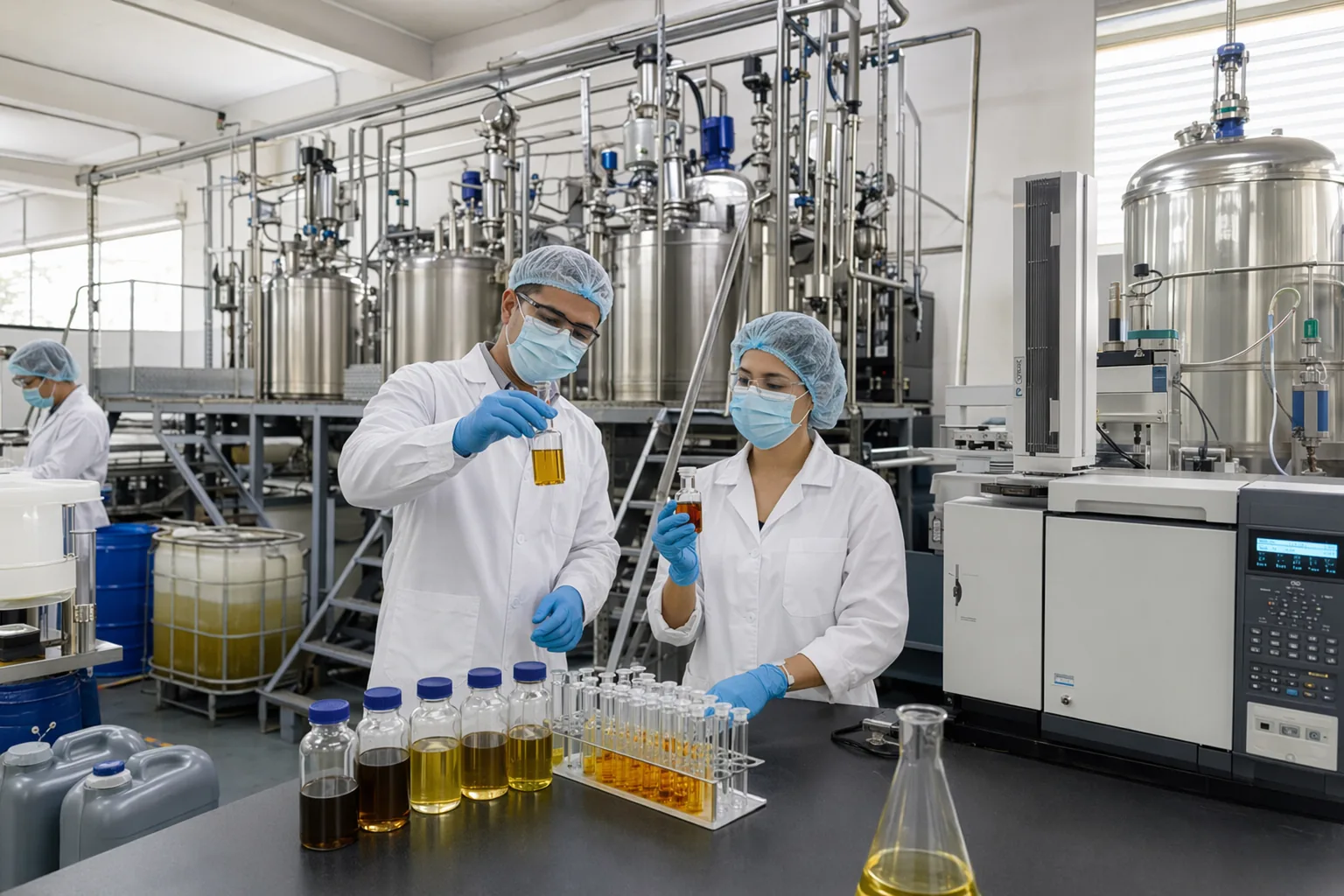
Build more reliable biodiesel enzyme programs with supplier-ready specifications, pilot validation steps, and practical process windows for industrial formulation teams.
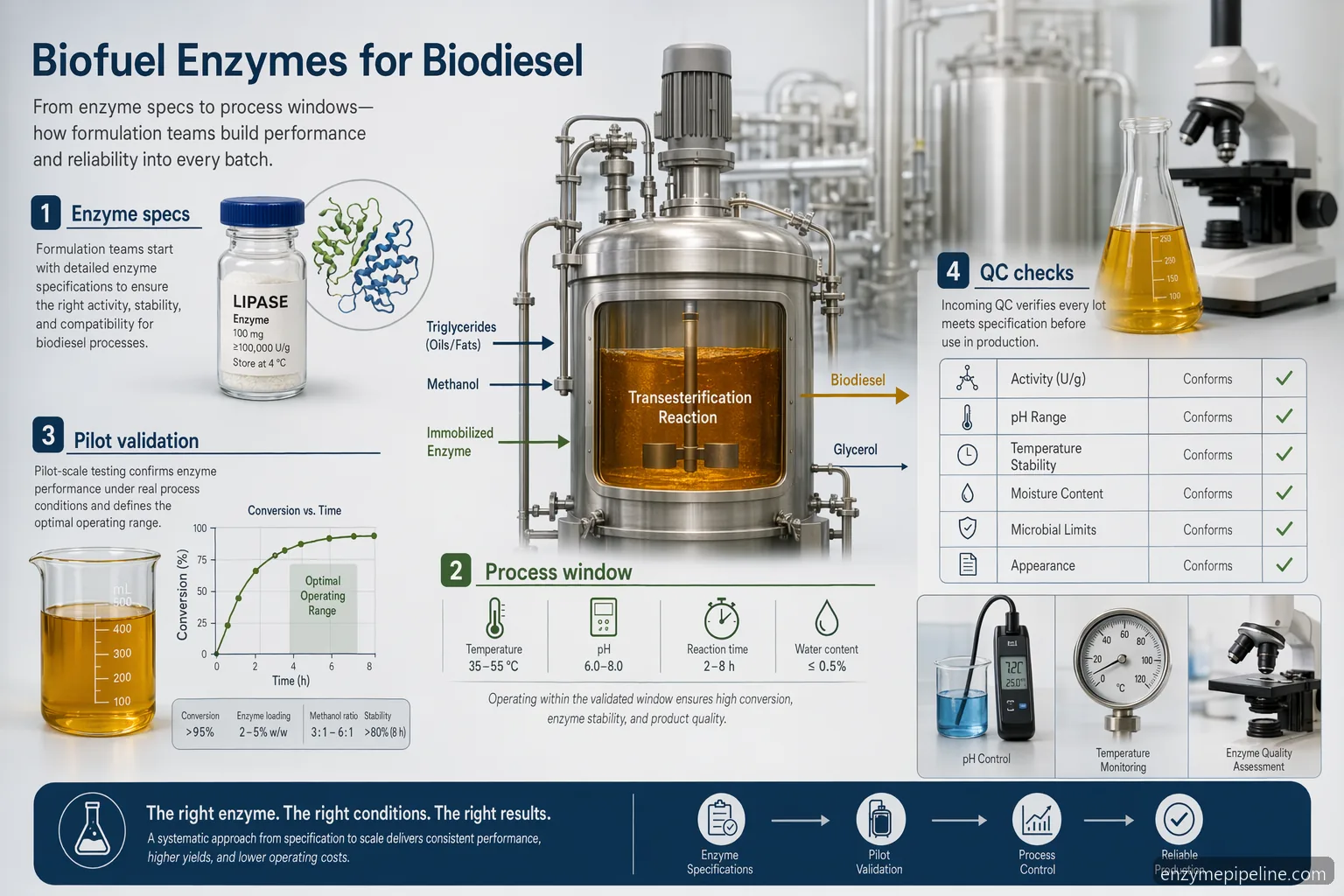
Why biodiesel formulators use biofuel enzymes
A biofuel enzymes supplier for biodiesel supports producers that need more flexible processing of vegetable oils, used cooking oil, animal fats, and high-FFA feedstocks. In biodiesel, the primary enzyme class is lipase, which can catalyze esterification of free fatty acids and transesterification of triglycerides into fatty acid methyl esters or ethyl esters. Compared with purely chemical catalysis, enzyme-based routes may reduce soap formation and simplify handling of challenging feedstocks, but the process must be engineered carefully. Methanol concentration, water activity, temperature, impurities, and enzyme stability all influence conversion. Industrial biofuel enzymes biodiesel projects should begin with defined feedstock analysis, not a generic dosage recommendation. The supplier should help match enzyme format, activity units, carrier system, and operating conditions to the plant’s feedstock slate, reactor design, downstream separation plan, and economic targets.
Primary target reaction: lipase-catalyzed esterification and transesterification • Common feedstocks: crude oils, refined oils, used cooking oil, tallow, and acid oils • Key decision: liquid enzyme, immobilized enzyme, or enzyme-assisted pretreatment
Process conditions to screen before scale-up
For biodiesel formulation work, enzyme screening should test a practical design space rather than one ideal laboratory condition. Many lipase systems are evaluated around 30-55°C, with pH relevant mainly for aqueous pretreatment or enzyme handling steps, often near pH 6.0-8.0 depending on the enzyme. In the esterification or transesterification reactor, water content and alcohol addition strategy are usually more important than bulk pH. Excess methanol can deactivate some lipases, so staged methanol dosing is commonly evaluated. Initial enzyme dosage bands may range from about 0.1-5.0% by weight of oil for immobilized or formulated lipase systems, but actual dosage depends on activity, feedstock FFA, residence time, and reuse strategy. Always confirm the supplier’s TDS and run a plant-specific pilot before fixing the formulation.
Temperature screen: typically 30-55°C unless supplier data indicates otherwise • Alcohol strategy: compare staged versus single methanol addition • Water: monitor by Karl Fischer and optimize for conversion and stability • Dosage: evaluate cost-in-use, not only activity per gram
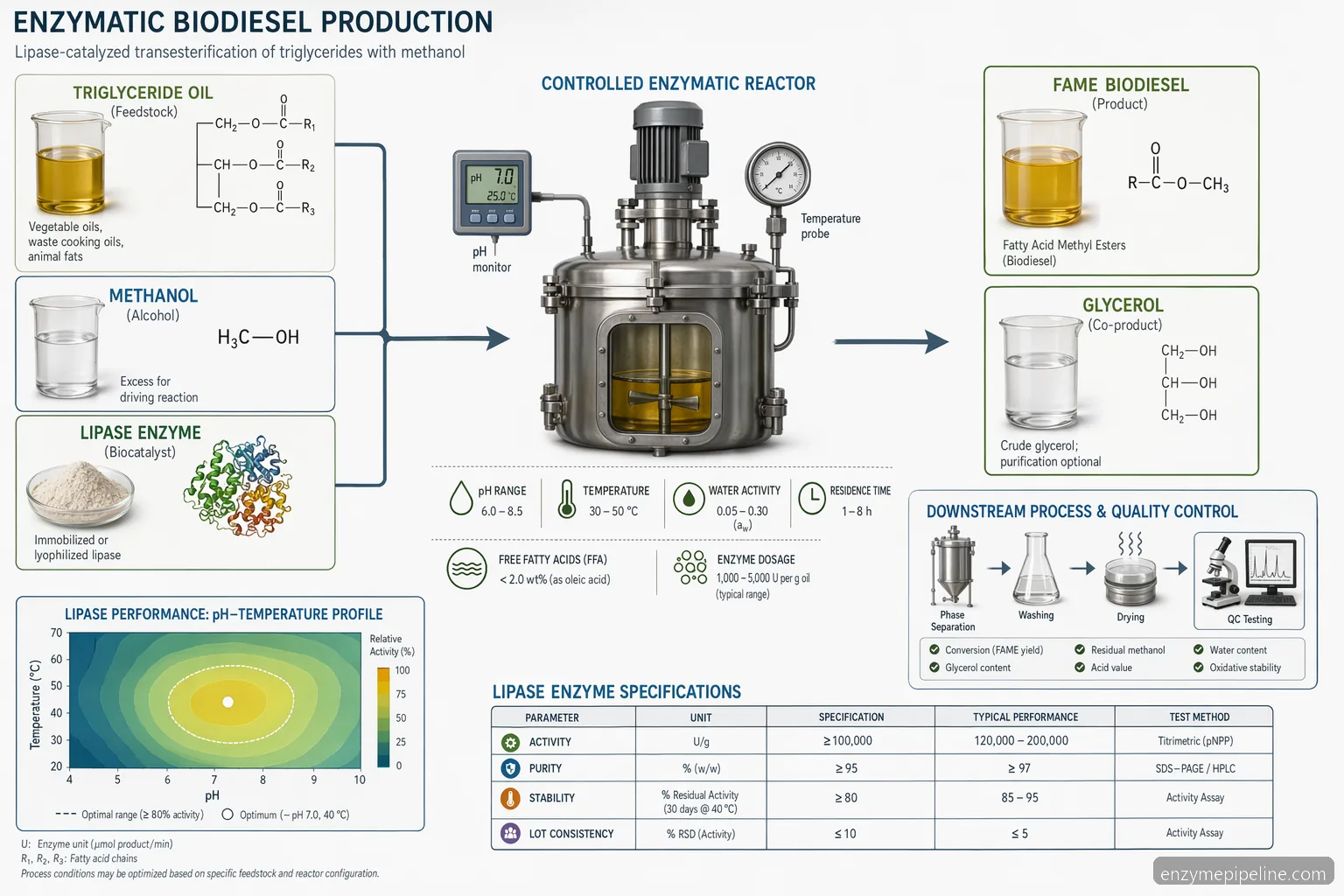
QC checks for biodiesel enzyme trials
A disciplined QC plan is essential when evaluating biofuel enzymes for biodiesel. Start with incoming feedstock tests: free fatty acid level, acid value, water content, phosphorus, insoluble impurities, peroxide value if oxidation is a concern, and metals or soaps where relevant. During the reaction, track FAME formation by GC, residual mono-, di-, and triglycerides, glycerol separation, acid value reduction, and methanol level. For enzyme lots, request the activity method, unit definition, appearance, moisture or carrier information, recommended storage, shelf-life statement, and a COA tied to the shipped lot. The SDS should address industrial handling, dust or aerosol precautions, and cleanup. These checks allow the formulation team to separate enzyme performance issues from feedstock variability, alcohol inhibition, contamination, or downstream separation problems.
Feedstock QC: FFA, water, phosphorus, insolubles, and acid value • Reaction QC: FAME, residual glycerides, glycerol, methanol, and acid value • Enzyme QC: COA, activity method, lot number, storage, TDS, and SDS
How to qualify a biofuel enzyme supplier
Supplier qualification should verify technical fit, documentation quality, and supply reliability. Ask for a current TDS, SDS, COA sample, lot-specific COA format, activity assay description, storage and handling limits, country of origin, packaging options, and change-control process. For an industrial biofuel enzymes biodiesel program, the supplier should also support small-sample screening, pilot validation, and scale-up troubleshooting. Commercial discussion should include minimum order quantity, lead time, batch-to-batch variation, recommended retest interval, shipping temperature, and contingency supply. Avoid relying on broad statements about the biofuel enzymes market; instead, request data generated under conditions close to your oil quality, alcohol system, reactor residence time, and separation method. A qualified partner helps connect formulation performance with operational realities, including enzyme reuse, filtration, immobilized carrier integrity, and wastewater load.
Documents: COA, TDS, SDS, activity method, and storage guidance • Commercial checks: MOQ, lead time, packaging, and lot traceability • Technical checks: pilot support, reuse data, and feedstock compatibility
Beyond biodiesel: cellulosic ethanol and biogas context
Although this page focuses on a biofuel enzymes supplier for biodiesel, many buyers also compare enzymes used in biofuel production across cellulosic ethanol and biogas. A biofuel enzymes supplier for cellulosic ethanol may provide cellulases, hemicellulases, beta-glucosidases, and accessory enzymes that help turn plants into biofuel with the power of enzymes by releasing fermentable sugars from pretreated biomass. A biofuel enzymes supplier for biogas may offer enzyme blends intended to improve hydrolysis of fibrous substrates before anaerobic digestion. These applications use different enzyme classes, operating conditions, and QC endpoints than biodiesel. For biodiesel procurement, do not assume a biomass enzyme or bioethanol enzyme is suitable for oil conversion. Define the target reaction, feedstock chemistry, unit operation, and acceptance criteria before requesting samples.
Biodiesel: lipases and oil pretreatment enzymes • Cellulosic ethanol: cellulases, hemicellulases, and beta-glucosidases • Biogas: hydrolysis-focused enzyme blends for digestibility support • Procurement rule: match enzyme class to the target substrate and process
Technical Buying Checklist
Buyer Questions
The main enzymes used in biodiesel production are lipases, which catalyze esterification of free fatty acids and transesterification of triglycerides with methanol or ethanol. Some plants may also evaluate phospholipases or related enzymes for oil pretreatment when gums or phosphorus are problematic. The correct enzyme depends on feedstock quality, alcohol system, reactor design, separation method, and target biodiesel specification.
A practical starting screen is often 30-55°C, controlled water content, and staged alcohol addition, with pH considered mainly for aqueous pretreatment or enzyme handling steps. Initial dosage may be screened around 0.1-5.0% of oil weight depending on the enzyme format. Always follow the supplier TDS and confirm with bench and pilot data using your actual feedstock.
Compare suppliers on cost-in-use, not only price per kilogram. Review activity units, unit definition, dosage, conversion, reaction time, enzyme reuse, feedstock tolerance, storage stability, and downstream impact. Request COA, TDS, SDS, lot traceability, and change-control information. A lower-priced enzyme may be more expensive if it requires higher dosage, longer residence time, or creates separation problems.
Usually no. Biodiesel typically requires lipases for lipid conversion, while cellulosic ethanol uses cellulases, hemicellulases, beta-glucosidases, and accessory enzymes to release sugars from biomass. Biogas applications often use hydrolysis-focused blends for fibrous substrates. Each application has different substrates, pH, temperature, residence time, and QC endpoints, so enzyme selection should be application-specific.
A qualified supplier should provide a lot-specific COA, technical data sheet, safety data sheet, activity assay method or unit definition, storage and handling guidance, packaging details, and shelf-life or retest information. For industrial purchasing, also ask about lot traceability, lead time, minimum order quantity, change-control notification, and availability of pilot-scale samples for validation.
Related Search Themes
industrial biofuel enzymes biodiesel, biofuel enzymes supplier for cellulosic ethanol, biofuel enzymes supplier for biogas, biofuel enzymes for biodiesel, biofuel enzymes market, turn plants into biofuel with the power of enzymes
Biofuel & Industrial Enzymes for Research & Industry
Need Biofuel & Industrial Enzymes for your lab or production process?
ISO 9001 certified · Food-grade & research-grade · Ships to 80+ countries
Frequently Asked Questions
What enzymes are commonly used in biodiesel production?
The main enzymes used in biodiesel production are lipases, which catalyze esterification of free fatty acids and transesterification of triglycerides with methanol or ethanol. Some plants may also evaluate phospholipases or related enzymes for oil pretreatment when gums or phosphorus are problematic. The correct enzyme depends on feedstock quality, alcohol system, reactor design, separation method, and target biodiesel specification.
What process conditions should I use to test biofuel enzymes for biodiesel?
A practical starting screen is often 30-55°C, controlled water content, and staged alcohol addition, with pH considered mainly for aqueous pretreatment or enzyme handling steps. Initial dosage may be screened around 0.1-5.0% of oil weight depending on the enzyme format. Always follow the supplier TDS and confirm with bench and pilot data using your actual feedstock.
How do I compare quotes from biofuel enzyme suppliers?
Compare suppliers on cost-in-use, not only price per kilogram. Review activity units, unit definition, dosage, conversion, reaction time, enzyme reuse, feedstock tolerance, storage stability, and downstream impact. Request COA, TDS, SDS, lot traceability, and change-control information. A lower-priced enzyme may be more expensive if it requires higher dosage, longer residence time, or creates separation problems.
Can the same biofuel enzyme be used for biodiesel, cellulosic ethanol, and biogas?
Usually no. Biodiesel typically requires lipases for lipid conversion, while cellulosic ethanol uses cellulases, hemicellulases, beta-glucosidases, and accessory enzymes to release sugars from biomass. Biogas applications often use hydrolysis-focused blends for fibrous substrates. Each application has different substrates, pH, temperature, residence time, and QC endpoints, so enzyme selection should be application-specific.
What documentation should a biodiesel enzyme supplier provide?
A qualified supplier should provide a lot-specific COA, technical data sheet, safety data sheet, activity assay method or unit definition, storage and handling guidance, packaging details, and shelf-life or retest information. For industrial purchasing, also ask about lot traceability, lead time, minimum order quantity, change-control notification, and availability of pilot-scale samples for validation.
Ready to source?
Turn This Guide Into a Supplier Brief Request a biodiesel enzyme sample, COA/TDS/SDS package, and pilot validation support from Enzyme Pipeline.
Contact Us to Contribute